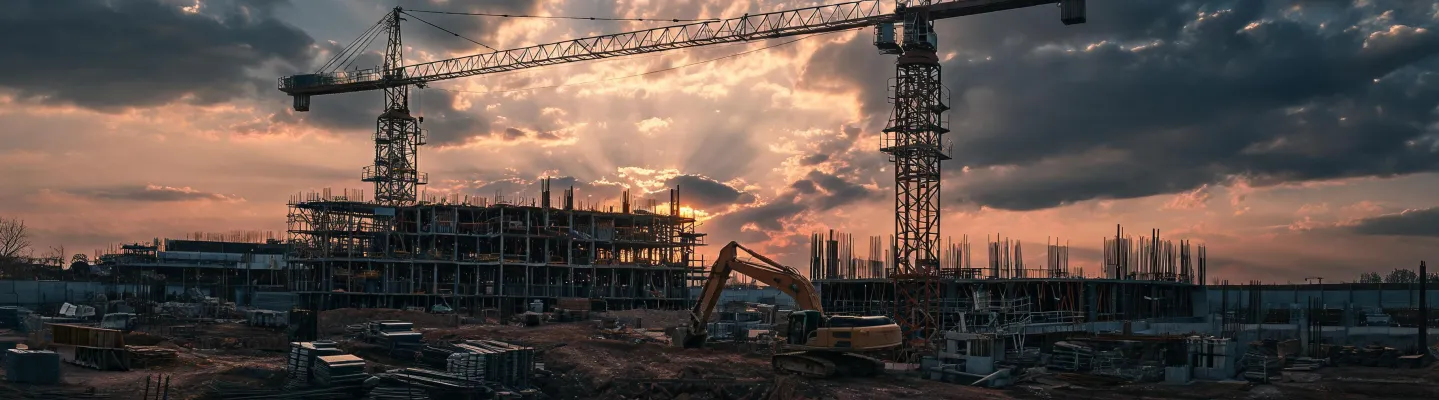
We signed the purchase order for our last city crane at $348,000. The winning dealer came in roughly 6% under the next closest bid. I felt good about it — I'd run a clean three-quote comparison, checked the specs line by line, and my spreadsheet said we'd saved about twenty grand.
Two and a half years later, I pulled that machine back into our TCO tracker. Including parts, service calls, and two days of unplanned downtime, it had cost us 11% more than the highest bid we'd rejected.
That's the version of the story nobody puts in the procurement case study. So let me walk through what I actually missed, because I've watched three other teams in my network make the same mistake since.
The problem you think you're solving
When you're sourcing a city crane — whether it's a Terex AC series, a compact RT, or something else in the 35-60 ton class — the decision feels like a pricing exercise. Three dealers, three quotes, roughly comparable specs, pick the lowest number that still checks the boxes.
That's how most purchasing policies are written. Mine was. Three bids minimum, TCO spreadsheet, weighted scoring. On paper, airtight.
The issue isn't the process. It's what we feed into it.
The deeper problem: the price tag is only one quarter of the story
Here's the thing I didn't internalize until I had enough data to actually see it: on a piece of Terex equipment running in mixed urban and industrial work, the acquisition price ends up being somewhere between 40% and 55% of the five-year cost. The rest is parts, service labor, consumables, and — the one nobody likes to model — downtime.
Our internal numbers on the fleet I manage (about 130 machines across material handling and lifting, though we only run 11 city cranes) show that pattern holds pretty consistently. And when I broke it down by vendor, the dealer with the lowest upfront number was, in three out of five cases, not the lowest at year three.
Why? Because city crane economics have three cost layers that don't show up on the quote page:
- Genuine parts availability. Not just whether the part exists, but how fast a Terex authorized dealer can actually put it in your yard. The delta between a well-stocked regional dealer and one that has to source from a central warehouse is measured in days.
- Service responsiveness within the metro. A city crane on a tight job site is the definition of a machine that can't wait. If your dealer's nearest technician is 90 minutes out, you're paying for that gap.
- Documentation and warranty alignment. Authorized dealer networks handle this cleanly. Mixed channels get messy fast — and messy paperwork becomes denied claims, which become unbudgeted line items.
None of that shows up in a line-item comparison. All of it shows up in your budget somewhere around month 18.
Why the 'dealer premium' argument gets this backwards
I've heard the pitch a hundred times: why pay authorized-dealer prices when the aftermarket can source the same part for less?
Honestly, I used to partly believe it. Then I sat down and actually tracked it.
Over 34 months, we logged every parts order on the city cranes — roughly $214,000 in total spend. The orders that went through authorized channels cost, on average, 9-14% more per line item. But they also arrived 2.8 days faster on median, and we had zero rejected warranty claims on them. The alternative-channel orders had three claims disputed, and we ended up eating about $6,800 that I had 'saved' six months earlier.
Put another way: the savings were real. The net savings weren't.
I'm not going to sit here and tell you authorized is always right. If you're running an older machine out of warranty, doing your own maintenance, and the part is a wear item — sure, evaluate the alternatives. But the calculus changes completely when the machine is under warranty, on a negotiated service contract, or doing anything safety-critical in a city.
What the downtime actually costs (and why the quote never mentions it)
This is where the model breaks for most procurement teams. We know how to price a part. We're terrible at pricing a stopped machine.
On our urban jobs, a city crane that goes down on a Tuesday morning triggers:
- Idle crew costs (typically $1,800-$2,400/day depending on the crew size)
- Schedule penalties if the lift was on a critical path (we've hit $4,500 in a single incident)
- Emergency rental premium if we need a substitute machine within 24 hours
- Re-inspection and re-certification if the repair touched the load path
Four days of downtime on a bad week can easily consume the entire 'savings' from picking the lowest bid. I've watched it happen. And the machine that goes down fastest to a repair is almost always the one with the closest authorized dealer and the cleanest parts channel.
I don't have a clean way to model this for every fleet. I can only speak to our mix — mid-size urban and light industrial work — where the pattern is unmistakable. If you're running cranes in a rural setting or doing low-hours seasonal work, the calculus is probably different.
What I actually changed
Not much, structurally. But the inputs changed:
We reverse the RFP order. Instead of asking for price first, we now ask every dealer for their service radius, their median parts turnaround on the specific model we're considering, and the name of the technician who'd actually be dispatched. Price comes last.
We negotiate parts and service terms into the purchase agreement. Not as a discount — as a commitment. Response-time targets, parts availability guarantees for the specific machine class, and a documented escalation path when something goes sideways.
We run a five-year TCO, not a three-year. Three years hides the tail. Five years is where the real divergence between dealers shows up in our data.
And we still buy on price. Just not only on price. The lowest bid wins when it can also pass the service and parts bar. That used to feel like a soft criterion. Now it's roughly 40% of the weighted score, and I'd push it higher if my director would let me.
The one thing I'd tell my 2023 self
If you're sourcing a city crane — or really any lifting equipment that's going to be doing urban work — get clarity on the parts and service channel before you get clarity on the price. Not because dealers are trying to hide anything, but because the number on the invoice is the easiest thing to compare and the least predictive thing about the next five years.
I still keep the spreadsheet. I just changed what I put in it.