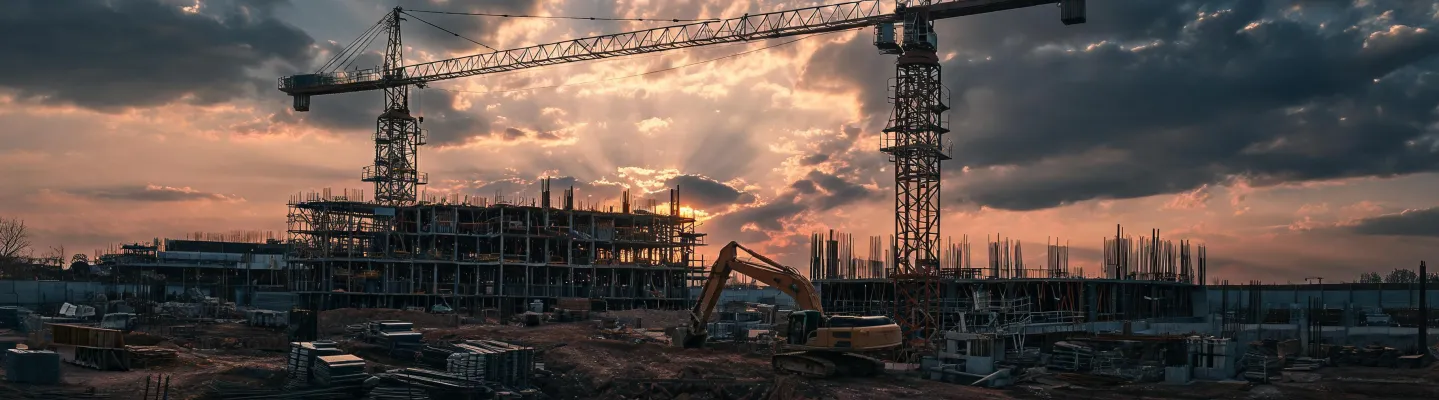
That Tuesday started with a phone call from the yard. The Terex 40 ton crane was throwing a warning on the swing drive, and the operator said it sounded "gritty" when she rotated the boom. By lunchtime, our usual diagnostics pointed to a sun gear in the swing planetary. By Friday, I had a decision to make—and I made the wrong one.
Before you judge, let me explain who I am. I handle parts and service orders for a mixed fleet of cranes, excavators, loaders, and backhoes. I've been doing it for eight years. I've personally made—and documented—five significant procurement mistakes, totaling roughly $37,000 in wasted budget. This was the worst. Now I maintain our team's pre-order checklist, and I'm writing this so you don't repeat my exact error.
How the Terex 40 Ton Crane Broke Down
In September 2022, our Terex 40 ton crane was the busiest machine in the yard. Not because it was newest—it wasn't—but because it had the right capacity-to-weight ratio for the site work we were doing. It was also the machine we were using for a small bulk ton crane trial: moving prefabricated steel assemblies around a plant renovation. That "bulk ton" work meant high cycle counts, not just one big lift.
The swing drive warning first appeared on a Tuesday. The operator said it sounded "gritty" when she rotated the boom. Our local tech suspected the sun gear in the swing planetary. He gave me the Terex part number and said, "Four days from the authorized dealer, maybe five if they have to pull it from another branch."
And then came the offer. A parts supplier I'd been testing for non-critical items emailed a quote: "direct replacement" with a 48-hour delivery promise and a price that was 40% lower than the Terex crane parts and service quote. I didn't need to check the box that said "equivalent." I already knew I was going to order it.
That was mistake number one. "Cheaper" wasn't bad by itself. The problem was that I made the decision based on two numbers—price and delivery time—and ignored every question that actually mattered.
The Part That Almost Fit
The part arrived on Thursday, right on schedule. I remember feeling good about it. The box had the right labels, the part had the right weight, and it looked like the photos in the supplier's catalog. I approved the install without checking the hard details.
Our mechanic, Mike, started the job Friday morning. The first issue showed up within an hour. The sun gear's teeth were the right width, but the hub that fits onto the drive shaft was 1.5 millimeters too tight. Mike called me over and said, "This could work, but I'd have to heat it up and make sure the shaft isn't the one that's out of spec. You want me to?"
I said yes. That was mistake number two. We forced the fit, ran a load test, and everything worked for about 30 minutes. Then the swing drive started whining. Then it locked up. Then we had a much bigger problem than the one we started with.
The supplier's response was polite but useless. They said the part was "designed to OEM tolerances" and the issue was an installation or shaft-misalignment problem. They offered a replacement at 50% cost, which would arrive in another 10 days. Meanwhile, the Terex 40 ton crane was sitting in the yard with a disassembled swing drive and no workable timeline.
I tell this part honestly because it's the part I'm least proud of. I had gone outside the authorized dealer network to save money and time, and I ended up losing both.
The Real Cost
We ended up calling the authorized Terex service team anyway. Their tech took one look at the failed part and pointed to the gear tooth profile. "This is a private-label equivalent," he said. "The material is close, but the tooth geometry isn't the same. It's not going to wear the same, and it's not going to load-share the same." He also found that the hub's spline depth had caused the shaft to wear beyond spec.
Mobile crane private label parts aren't automatically junk. But in this case, the supplier's private label was built from a reverse-engineered pattern, not from the original manufacturer's drawing set. It fit almost. Almost doesn't count when the part carries the rotation and inertia of a boom.
The final invoice was painful: $2,400 for the factory sun gear and the shaft repair, plus $1,400 for the service call and the extra shop time—and I'm not counting the two weeks the crane was down. The $3,800 figure only covered what I could write on a purchase order. It didn't cover the customer who had to reschedule three days of lifts, or the fact that our buoy "bulk ton crane" advantage disappeared while the machine sat idle.
I don't have hard data on industry-wide private-label parts failure rates. I wish I had tracked our own more carefully. What I can say from our purchase history is that the "compatible" part failure rate on load-bearing components is probably between 10% and 15%—and that's after you filter out the ones that never fit at all.
What I Should Have Asked First
Part of my problem was an old belief I carried into the decision: "Dealer markup is just a tax on being organized." That thinking came from an era when a dealer was mostly a warehouse with a phone. It's changed. The authorized dealer network has the original drawings, the current revisions, and the people who can answer a question when a bolt hole is 1.5mm off. The private-label supplier offered a price and a date. Those two facts told me which one actually understood the machine.
I now keep a checklist for any critical component—whether it's for a Terex crane, a loader, or a backhoe. The same questions work for every supplier. If you're asking what to look for in a backhoe supplier, start here.
1. Is the part sourced from the original manufacturer, or is it reverse-engineered?
There's a difference between a private-label part made on the same line and one that was measured off a used sample. Ask directly. If the sales rep hesitates, that's a red flag.
2. Can they provide the serial-number-specific revision?
Manufacturers change components over time. A sun gear for a 2016 Terex 40 ton crane may not be identical to one built in 2019. The right supplier will ask you for the machine's serial number before quoting, not after.
3. What happens if it doesn't fit?
The supplier's warranty terms tell you everything. If the best they'll offer is "50% replacement after inspection," you're accepting most of the risk. The authorized dealer network may cost more, but they also own the risk and the resolution process.
4. Can they support the install?
I don't need every parts supplier to offer technicians. But for critical components, I need their engineering line to answer the phone when Mike has a measurement question. The independent parts house that gets this right is gold. The one that doesn't—I can't use them.
5. Do they understand the application?
There's a difference between a backhoe bucket cylinder pin and a swing drive gear. One fails, the machine is down for a day. The other can fail in a way that puts the machine on a flatbed—or worse. A good supplier knows which category a part falls into.
The Quality Part Is the Brand Part
Here's the thing I remind myself every time I'm tempted to save money on a hard part: the quality of the part is the quality of the machine in the customer's eyes. You can have the best maintenance schedule in the industry, but if a crane or backhoe sits idle because you bought an almost-right sun gear, the customer doesn't blame the part. They blame the people who put the machine out of service. Quality is not a luxury. It's the cheapest way to protect the brand on the side of the machine.
That said, I'm not here to say you should never buy aftermarket or independent supplier parts. Some of my best supplier relationships are with independent houses who are honest about what they know and don't know. What I'm saying is this: for mobile crane load-bearing components, and for any part that could cause an accident if it fails, the burden of proof is on the supplier. If they can't prove it with engineering data, don't prove it with your budget.
Take it from someone who documented every step of that September 2022 mistake. The Terex 40 ton crane is back at work, the checklists are updated, and the lesson is written down in multiple places. Trust me on this one: the part that fits, from a supplier who knows what it's for, is always cheaper than the part that almost works. Always.